Nanotechnology.Wiki
In recent years, the word "nanotechnology" has received a lot of media attention. Nanotechnology has been hailed as the next scientific revolution, with promises of, among other things, faster computers, cancer treatments, and answers to the energy crisis. But what does "nanotechnology" actually mean? Can it deliver on all of these promises?
The National Nanotechnology Initiative's (NNI) official definition of nanotechnology is
Understanding and manipulating matter at scales between 1 and 100 nanometers, where peculiar occurrences allow for fresh applications, is known as nanotechnology.
Nanotechnology, which includes nanoscale science, engineering, and technology, entails seeing, calculating, modeling, and controlling materials at this tiny size.
Three fundamental ideas sum up the NNI definition:
Nanotechnology is incredibly tiny.
When something is on the nanoscale, at least one of its dimensions ranges from 1 to 100 nanometers (nm). When objects are this small, neither our eyes nor a standard light microscope can effectively view them. To see materials that are on the nanoscale size scale, scientists had to create specialized equipment, such as scanning probe microscopes.
Some substances, such as silicon atoms or water molecules, have ALWAYS existed on the nanoscale. However, recently researchers have been able to produce and modify materials prevalent at the macroscale to this size using novel tools and procedures, such as TiO2 particles (titanium dioxide).
Materials may act differently and unexpectedly at the nanoscale.
Many everyday materials display peculiar characteristics at the nanoscale, including noticeably lower electrical resistance, lower melting temperatures, or faster chemical reactions.
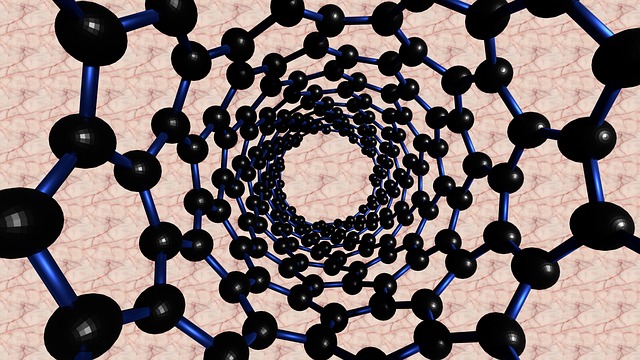
For instance, gold (Au) is bright and yellow at the macroscale. The gold particles do, however, appear red when they are 25 nm in size. The gold particles appear a distinct color because the smaller particles' interactions with light are different. Gold can seem red, yellow, or blue depending on the size and form of the particles. Tubes
Sunscreens are another instance of nanoparticles that appear distinct from the matching macroscale substance. For a very long time, sunblocks and sunscreens have contained titanium dioxide (TiO2). It is one of the components that gives creams their apparent white color. Because TiO2 nanoparticles appear transparent, manufacturers are now employing nanoparticles to make clear lotions and gels.
When materials are on the nanoscale, other properties can also change. For instance, soda cans are made of bright, malleable metal aluminum (Al). Aluminum particles are explosive and highly reactive at the nanoscale. Because they have a larger surface area than larger particles, nanoparticles are more reactive.
To create novel technologies, researchers strive to take advantage of these unique and unexpected characteristics.
Researchers from a variety of fields seek to develop a wide range of new products by leveraging these new behaviors, from commonplace items like lighter tennis rackets and antibacterial socks to cutting-edge solar cells, quicker computers, and disease-specific medicinal therapies. Many engineers and scientists believe that there are countless possibilities.
Chat with us for more information nanotechnology.wiki.